
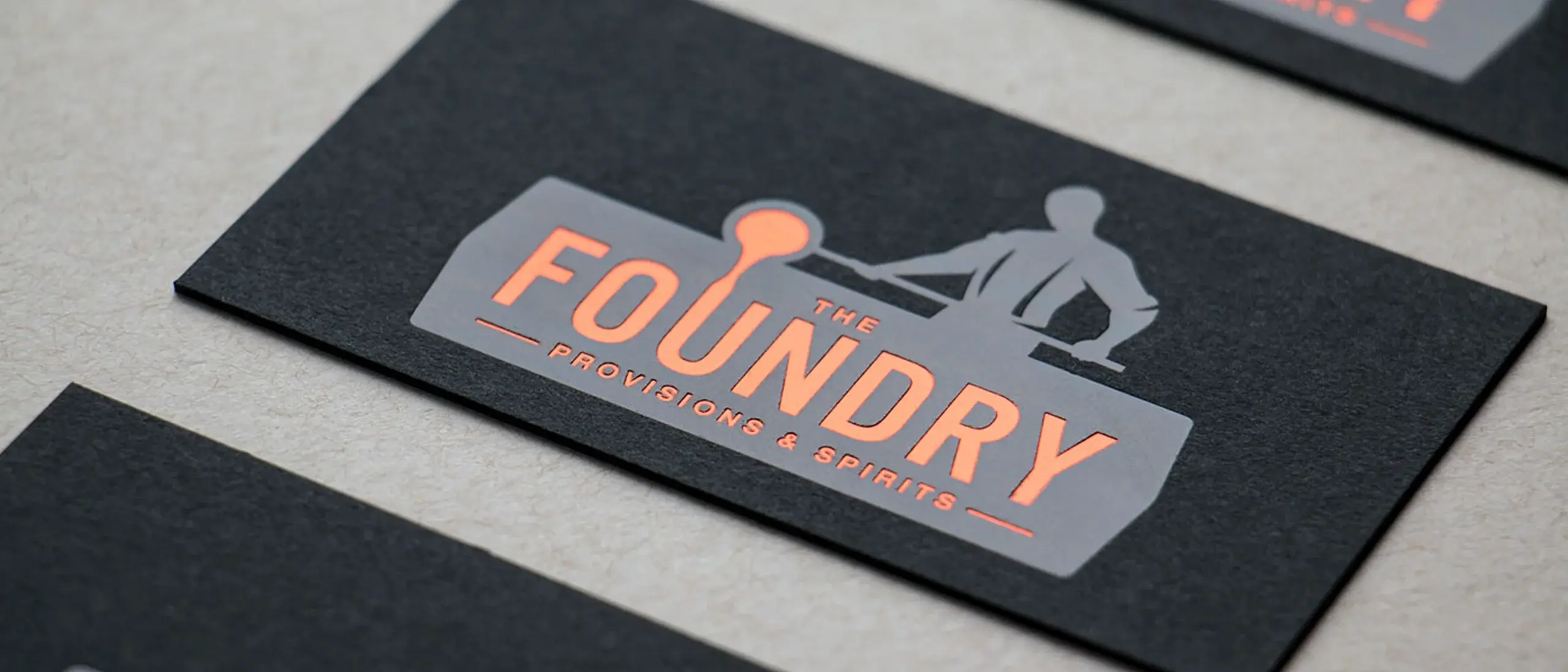
Business cards are everywhere, and most of them are forgettable. A letterpress card is something else — a small, tactile object that rewards the moment someone picks it up. This is a plain-language guide to how these cards are made in our studio in Alexandria, Louisiana, who they're right for, what they cost, and what to think about before you print.
What makes a letterpress business card feel different the moment you touch it?
It's the combination of thick paper, real texture, and a physical impression you can feel with your thumb. Digital and offset printing lay ink on top of the paper. Letterpress pushes it in. The ink becomes part of the sheet instead of sitting on the surface.
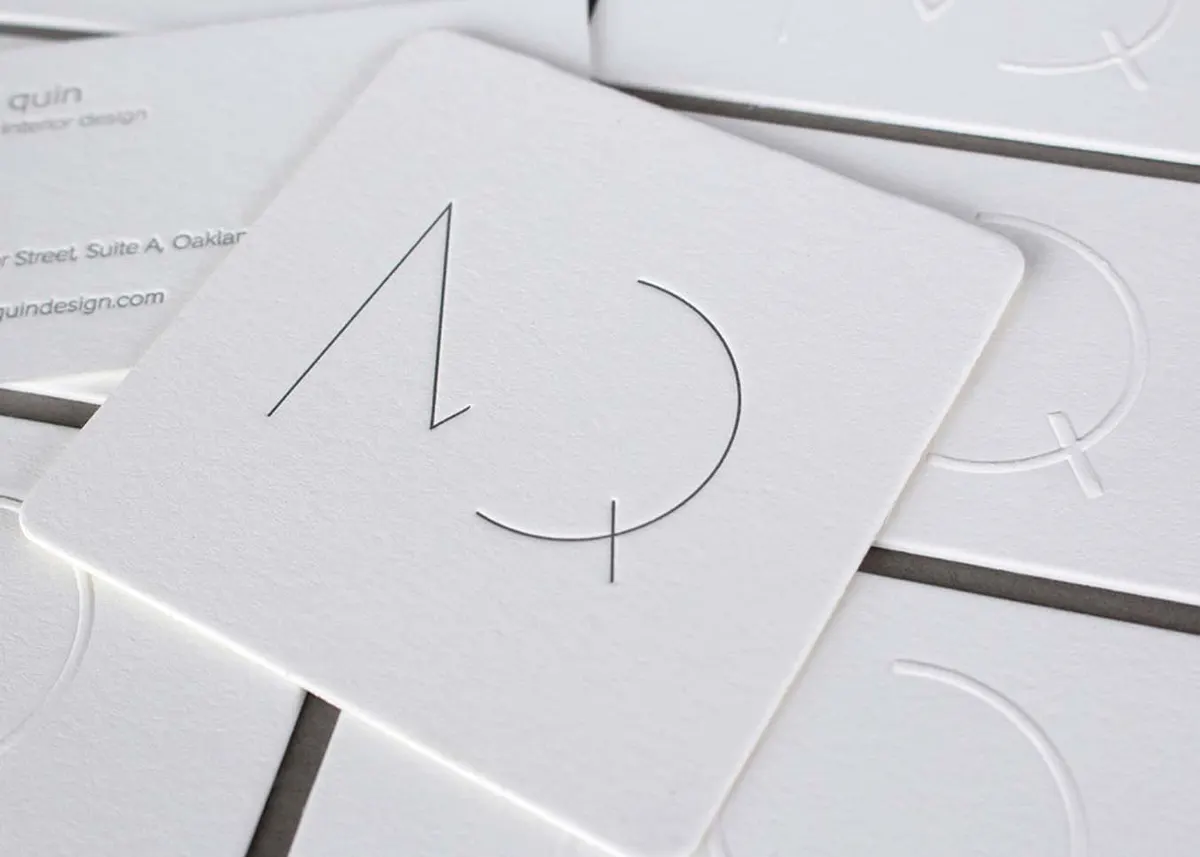
The raised, tactile impression that a letterpress makes in thick cotton stock.
When I hand someone one of my own cards for the first time, the reaction is almost always the same. They fumble with it for a second because they think I accidentally handed them two cards stuck together. Nope, that's one card. Then they notice the texture. Even people who don't think about paper at all can feel that something is different. Then their thumb finds the impression and their eyes light up. There's no substitute for that moment.
And then they just say, “hmm, nice card.” Trying to play it cool. But I know. I can see it on their faces.
And then they just say, “hmm, nice card.” Trying to play it cool. But I know. I can see it on their faces.
What does letterpress printing actually involve behind the scenes?
It involves a plate, a press, real paper, and a printer on the floor making dozens of small decisions as the job runs. I mix ink by hand to hit a Pantone match that also works with the shade of the paper we're printing on, which is its own thing. Paper isn't a neutral background. A warm white and a bright white will make the exact same ink look like two different colors.
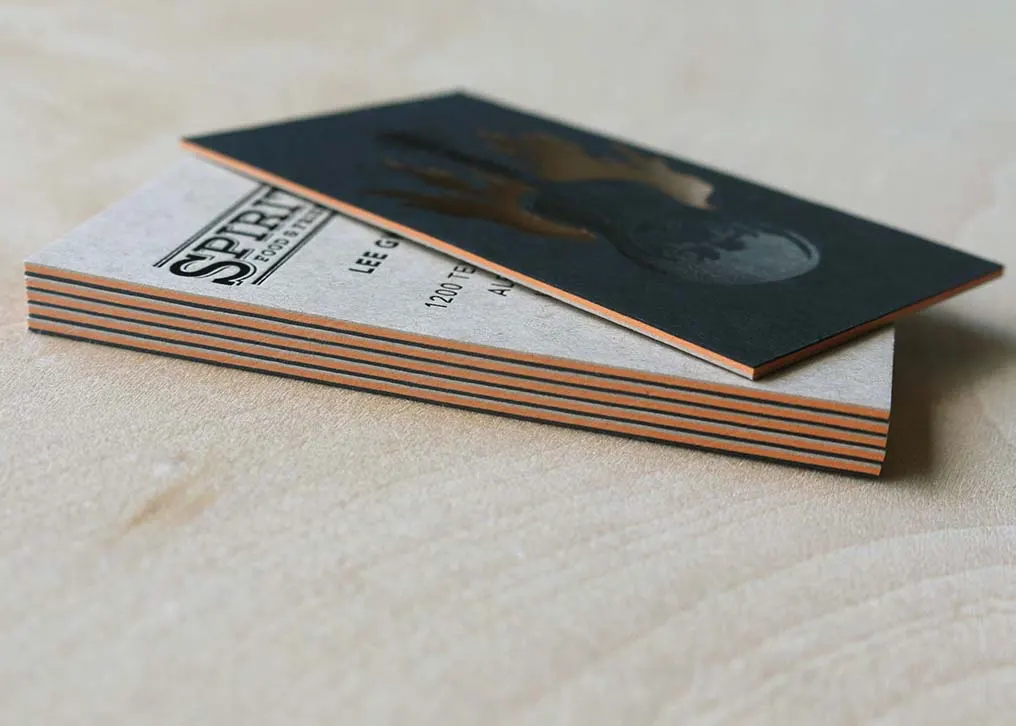
Copper foil on a black French Poptone sheet — color choice is as much about the paper as it is about the foil.
Once we're on press, I check the color under different lighting. Diffused office light, bright sunlight outside the shop, the overhead lights at the press. A card that looks great under one light and muddy under another isn't done. That's the part you can't automate, and it's the part that matters.
We run Heidelbergs. They're the best presses ever made, we keep them oiled and dialed in, and they'll outlive us all.
We run Heidelbergs. They're the best presses ever made, we keep them oiled and dialed in, and they'll outlive us all.
Who is the right customer for custom letterpress business cards?
Letterpress cards are for people whose business runs on relationships, authority, and long-term trust. Consultants, attorneys, designers, wedding professionals, real estate agents working the high end — anyone whose next client comes from the impression they leave on the last one.
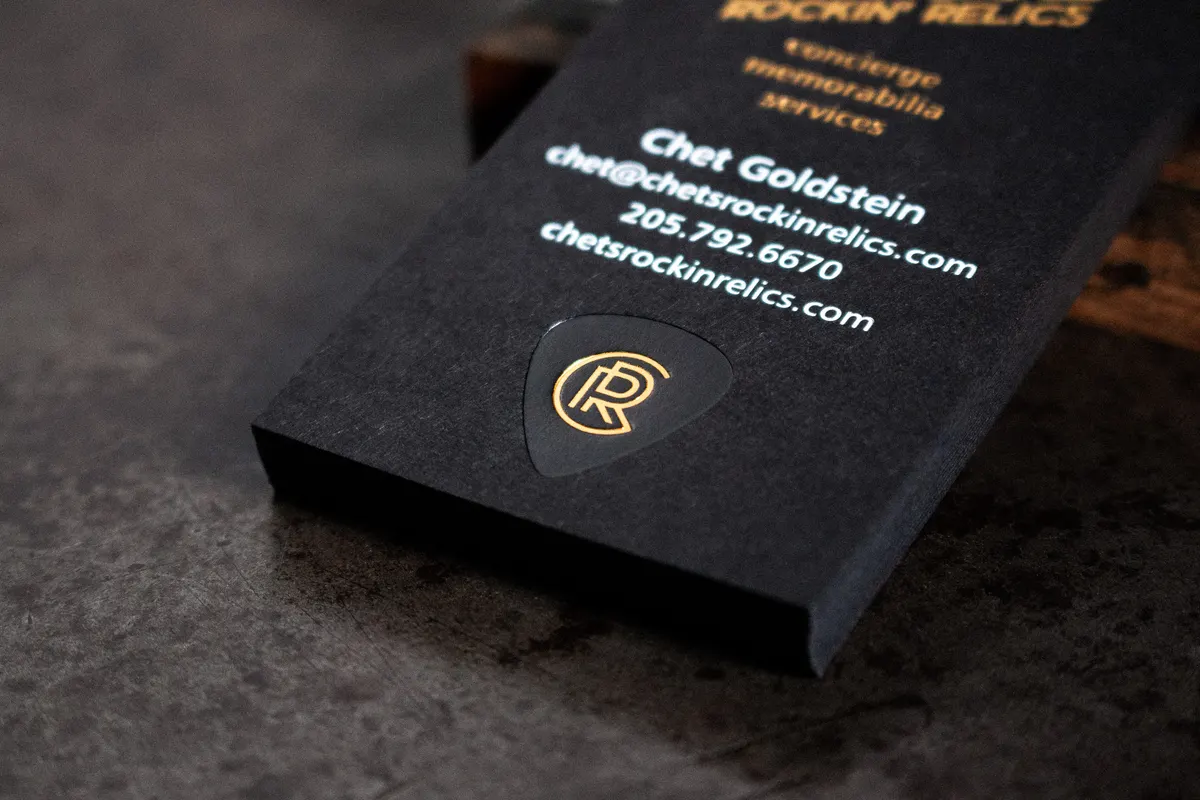
A triple-foil business card designed for a client whose brand leans into being remembered.
If your business model is handing out thousands of cards like bird seed, letterpress isn't for you, and that's completely fine. There are services that will print 5,000 cards for less than what a good stock costs, and for some businesses that math works. If you need a recommendation for that kind of job, call us anyway. We'll point you in the right direction or broker it for you.
But if you want a card that stops someone in their tracks, we should talk.
How much do custom letterpress business cards cost?
Every job is quoted individually because there are too many variables to list a price. Paper, ink colors, quantity, whether there's foil or die cutting involved, whether the art is print-ready or needs work. A simple one-color job on a house stock is a different animal than a three-color job with foil on cotton.
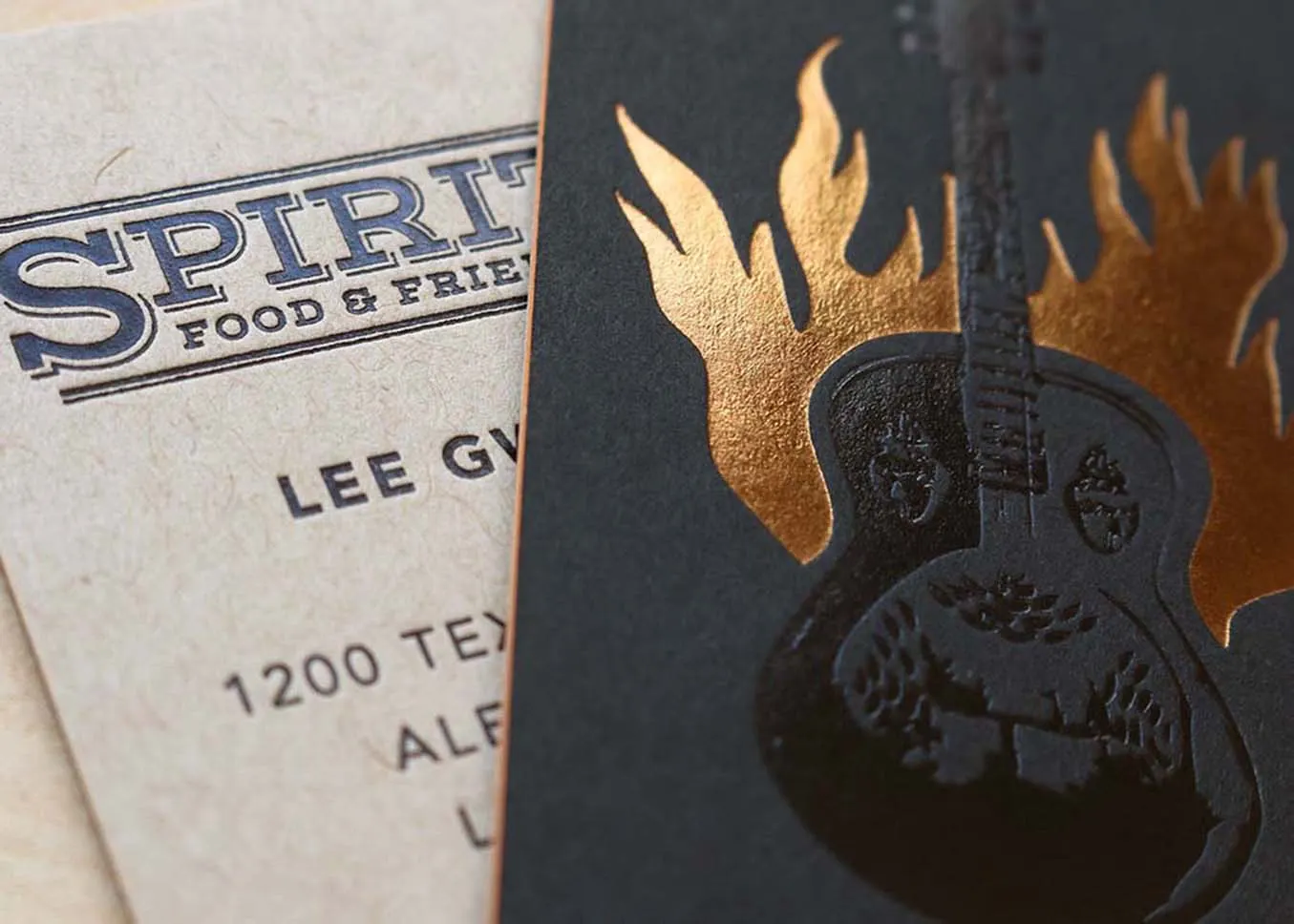
A quadplexed card for Spirits Restaurant — two foil colors, three different paper stocks laminated together. These are at the higher end of what we do.
What I can tell you is that a letterpress card is a small investment against the value of the relationship it's meant to start. The math changes completely when you think of a card as a tool for winning one real client, not as 500 units of disposable contact information.
Send us your project and we'll give you a real number.
What should I think about when designing for letterpress?
Design for the paper, design for the reader, and test your card in your hand before you send it to print.
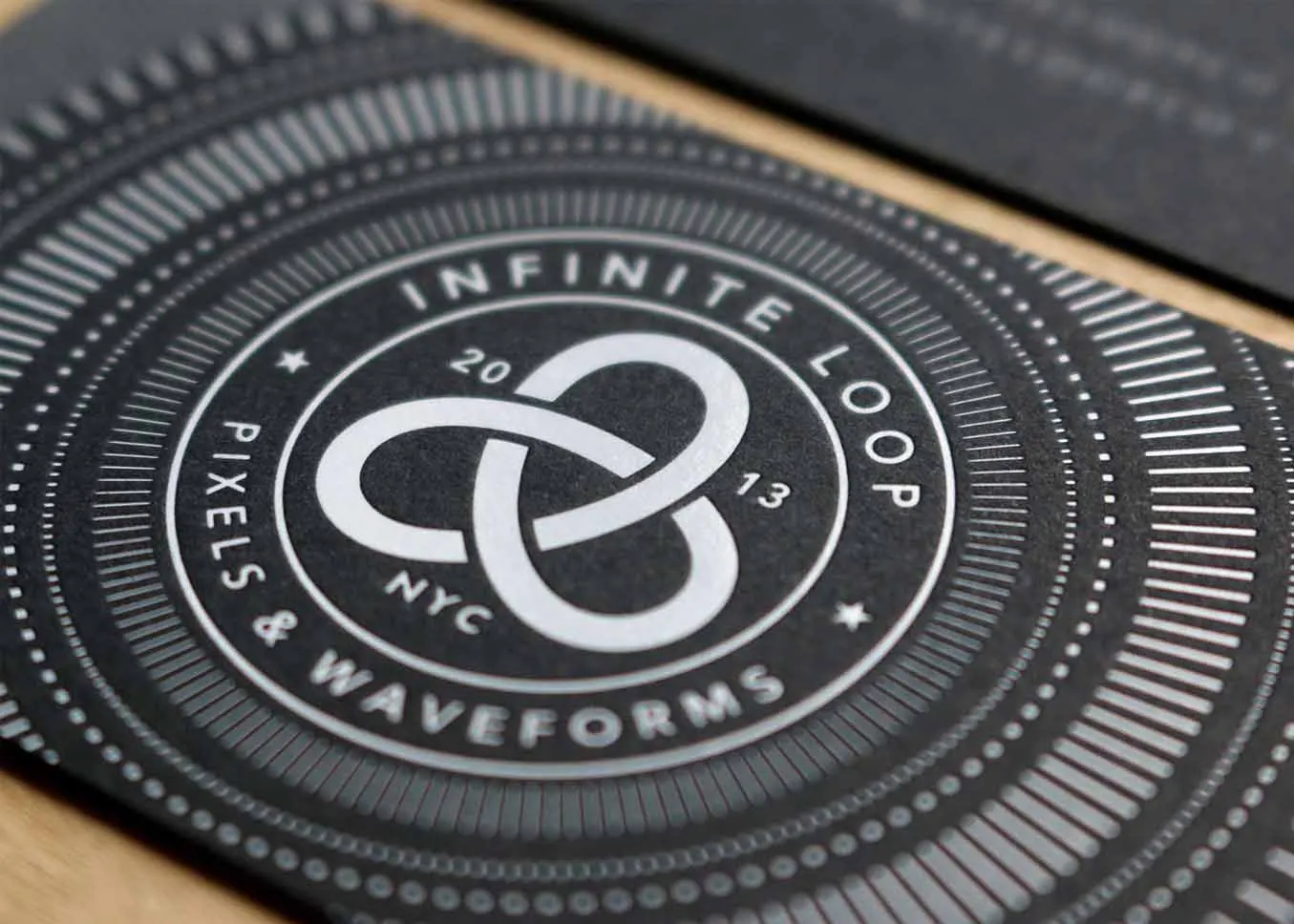
Restraint reads as confidence. Give the ink room to sink and the paper room to breathe.
A few things I'd ask you to consider:
You're printing on beautiful paper, so show some of it off. White space isn't wasted space in letterpress. It gives the ink somewhere to sink and gives the paper room to breathe. A crowded card fights itself.
Make your type big enough to actually read. Small type looks fine on a screen and terrible on a card in someone's hand, especially if that someone doesn't have perfect eyesight. Bigger type is easier to read, easier to press deeply, and the impression looks better at scale anyway. Your contact information should be easy to call, not a puzzle.
Print your design on whatever printer you have, any printer, and cut it out by hand at real business card size. Hold it.
My single best piece of advice is this: print your design on whatever printer you have, any printer, and cut it out by hand at real business card size. Hold it. Put it in your wallet. Hand it to a friend. You will see things you need to fix. I almost guarantee it. That fifteen-minute exercise saves people from expensive regrets more than anything else I tell them.
What kind of paper works best for letterpress?
Paper with tooth. That's the trade word for texture — a sheet with some character to it instead of a slick, glassy surface. Paper you can sink your teeth into, because we're going to give it some bite.
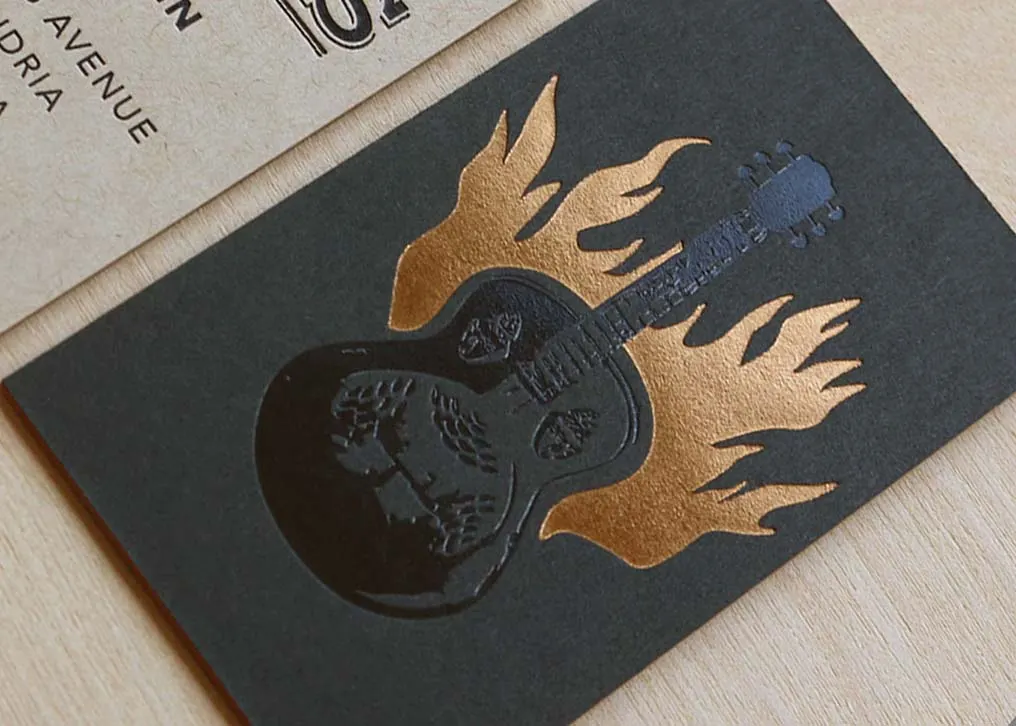
A triplexed card — three sheets laminated together. The edge becomes part of the design.
Weight matters too. Most of our letterpress cards run on 110lb or 130lb cover stock, sometimes heavier, sometimes doubled up and duplexed for that really substantial feel. Cotton and cotton-blend sheets take the deepest, crispest impression and feel incredible in the hand. Wood-pulp stocks can also be beautiful and usually cost less. We'll talk through the options with you based on what you want the card to do.
How long does it take to get custom letterpress business cards?
Three to five weeks, depending on the project and how fast we can move together.
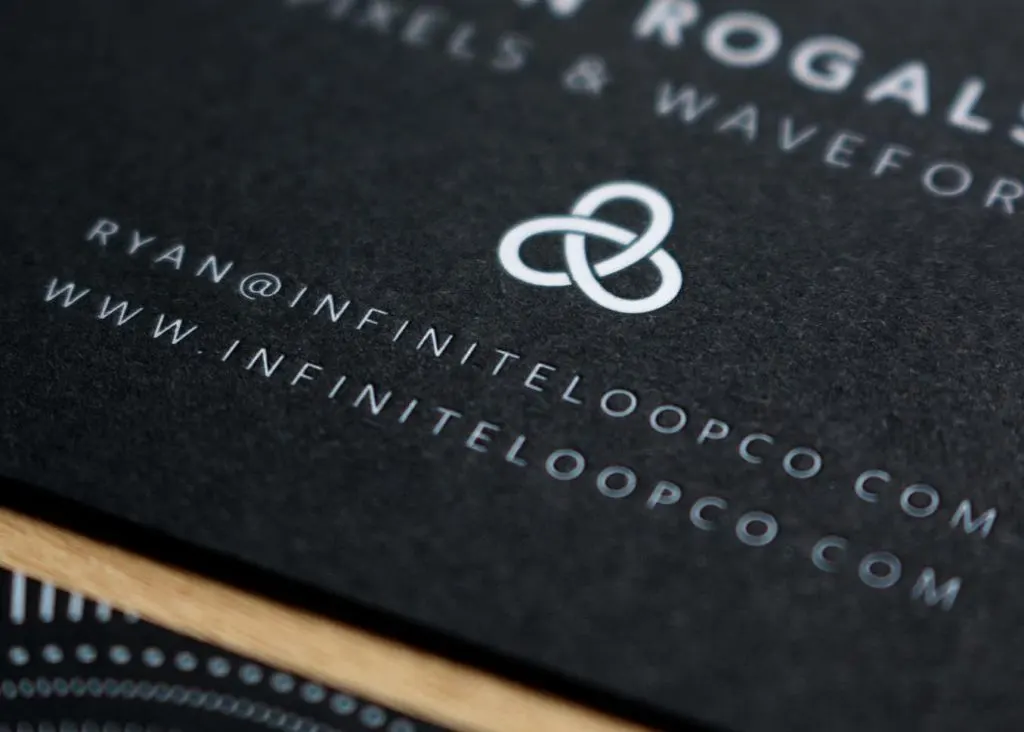
Finished cards ready to ship — most jobs land in the three-to-five-week window.
The timeline depends on a few things. Is your artwork print-ready or does it need production work? Do we need to go back and forth on proofs or samples? Are you a tire kicker or are you ready to roll? A client who responds to emails the same day and has their files in order can be on press quickly. A project that needs design refinement and a couple of rounds of samples takes longer, and that's fine — we just plan for it.
If you have a hard deadline, tell us up front and we'll tell you honestly whether we can hit it.
Ready to print something worth keeping?
This shop exists because a friend named Leslie once showed me a letterpress greeting card and it ruined my life in the best possible way. That's a longer story, and it's on our Our Story page if you want it.
If you want cards that make people stop, feel, and remember, let's talk about your project.