
The short version
Whoever said “timing is everything” may have been a stationery printer! Our life revolves around timing, so we can get your prints to you, you know, on time. Here’s the quickest way I know how to say it.
- Save-the-dates go out 6 to 8 months before the wedding.
- Invitations go in the mail 6 to 8 weeks before the wedding.
- Add a few weeks to both numbers if guests are traveling internationally or to a destination.
- Thank-you notes (and please don’t forget those thank you notes!) go out within 2 to 3 months of the wedding day.
Those are the dates that give your guests enough time to respond, to plan, and to get ready for a great time. But we need to think ahead, because there’s design and printing to be done before anything gets post-marked.
Why the deadlines actually exist
Every wedding stationery deadline traces back to one of three pressures.
The caterer needs a headcount. Most venues and caterers want a final guest count 10 to 14 days before the wedding. That number drives every other date. RSVPs need to be back before the headcount is due, which means the RSVP-by date on the response card needs to land 3 to 4 weeks before the wedding, which means invitations need to arrive in mailboxes about 6 weeks out, which means they need to be in the mail 6 to 8 weeks out (allowing for the dreaded ‘postal delays’ and the week guests sit on the envelope before opening it).
Guests need to book travel. For out-of-town guests, 6 weeks is not quite enough notice to book the best flights and hotels. That’s what save-the-dates hope to solve. They give your guests notice the date is coming so they can hold the weekend, request time off, and watch for those special fares. Without a save-the-date, the affordable flights could be all booked up by the time the invites arrive.
Press time books up just like flights. Get your designs in early so there’s plenty of room for proofing, revisions, and sourcing the right materials. Letterpress and foil are hands-on, craft processes, and they reward couples who plan ahead. A suite with foil and two letterpress colors needs multiple passes through the press, and each one is its own setup, but that’s also why those suites look the way they do. Talk to your printer early and get a feasibility check on your design concept. Most of us will tell you right away what’s possible, what’s ambitious, and what’s going to take a little more time.
Save-the-dates
When to mail them. Six to eight months before the wedding, or eight to twelve for destination weddings. But that rule changes for holidays, add extra time if your wedding falls on a holiday even if it is local or regional.
Why this window works. There’s some kind of human psychology reason (beyond printers pay grade) that there’s a sweet spot where something feels far enough away you can ignore it. These timelines are designed to feel just urgent enough to not be stressful, but something you should pay attention to.
When to start designing. Two to three months before you want them in the mail. That gives comfortable time for design, proofing, paper ordering, printing, and addressing, without anyone feeling rushed.
Planning a fall 2026 wedding? You’re right on time to get your save-the-dates moving, but you should be underway soon. October and November weddings are popular for good reason, and getting the cards out this spring or early summer means your guests can lock in travel while flights are still reasonable.
Planning a spring 2027 wedding? You’ve got some time (but be careful about that procrastination effect we talked about earlier). Save-the-dates for April or May 2027 weddings typically go out between September and November of this year, so summer is the right time to start the design conversation. Plenty of time to do something spectacular.
The invitation suite
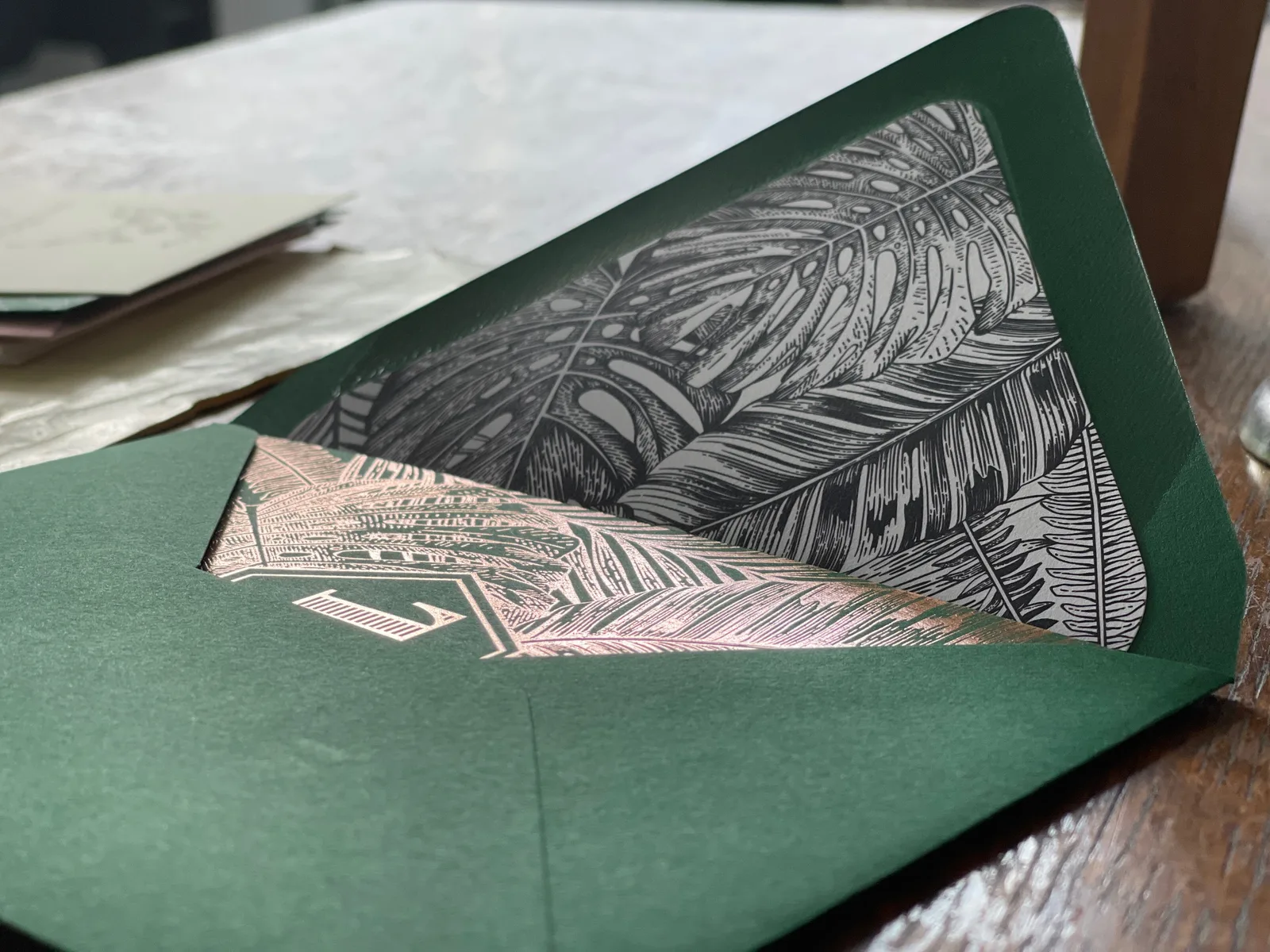
This is the big one. A traditional suite includes the invitation itself, a response card with its own pre-stamped reply envelope, often a details or accommodations card, and the outer mailing envelope.
When it goes in the mail. Six to eight weeks before the wedding for a local wedding. Ten to twelve weeks for a destination wedding or one with significant international travel.
Where the RSVP-by date lands. Three to four weeks before the wedding, so responses are back in time for the final headcount. The RSVP-by date is the most-watched date on the entire suite. It needs to give guests a reasonable window to respond (about three weeks from when they receive the invitation) without pushing past the caterer’s deadline.
When to start the printing process. Eight to twelve weeks before mailing day for a custom suite. Six to eight weeks for a semi-custom suite where the design is already established and only the wording changes. This timeline includes design rounds, proofing, plate making, paper procurement, printing each color and process, assembly, and addressing.
Day-of paper
Place cards are important, because by now we’ve worked up quite the appetite and we want to know right where to sit to get that tasty meal you mentioned on the RSVP cards. Same goes for programs, menus, table numbers, signage, all the little stuff that pulls the day together.
The catch with day-of paper is that none of it can really be designed until the seating chart is final and the menu is locked, and both of those tend to shift in the last few weeks.
When to start thinking about the printing process. If these are all flat-printed it’s one thing, but if we’re planning for letterpress plus variable digital printing (the thing that lets us print every guest’s name without making 150 letterpress plates, we’ve done it, you don’t want the bill!) it’s good to think through all these details before we’re making plates last minute and rushing things. Begin the conversation 8 to 10 weeks before the wedding. Lock final names, table assignments, and menu language at least 3 weeks before the wedding.
Why the cushion matters. Place cards are where this gets tricky. Each name is its own small print job. Three guests changing their RSVPs after the deadline, that’s normal, we expect that. Forty of them because the seating chart got rebuilt three days out, that’s a different conversation, and it’s the one that ends with rush fees and whatever paper we can put our hands on.
Thank-you notes
Thank you notes never get no respect, to paraphrase Rodney Dangerfield, but they certainly show respect to your guests, vendors, and anyone who helped make your special day a success. So we recommend making them a priority, too.
When they go out. Within 2 to 3 weeks for anything that shows up before the wedding (engagement gifts, shower gifts, the cousin who sends something the day after you get engaged). Within 2 to 3 months for everything received at or after the wedding itself.
When to order them. Order them as part of the invitation suite, or right after. Having a stack of cards already sitting on your desk when you get back from the honeymoon means you can actually start writing, instead of waiting on a print order while the gift pile keeps growing.
One thing nobody tells you. Three months sounds like a lot of time. It isn’t. A hundred and fifty handwritten notes, in the weeks where you’re also putting your normal life back together, is a real project. Having the cards on hand from the start at least takes one thing off the list.
Three things that make this whole process easier
Start the invitation conversation early. Picking out paper, looking at samples, settling on a design, all of that takes longer than couples expect, and it should. This is fun. Give yourself room to enjoy it instead of rushing the decisions. Reaching out to a printer three or four months before you want invitations in the mail gives you the kind of working time where you can actually try things.
If guests are traveling, send save-the-dates. They’re a small thing that makes a big difference. A card in the mail eight months out is what gets your favorite people in the room, because it lets them book flights while flights are still affordable and request the time off before someone else claims that weekend.
Plan day-of paper in two passes. Programs, menus, and signage can be designed early because they don’t change. Place cards and escort cards should wait until about three weeks out, when you actually know the seating chart. Splitting those two timelines is the easiest way to avoid stress and reprints.
If you’ve got a date on the calendar and you’re thinking about invitations, reach out. We love this stuff. Talking through paper options, design ideas, and what’s possible for your timeline is genuinely the fun part of our job, and we’d rather have that conversation early in the process.