
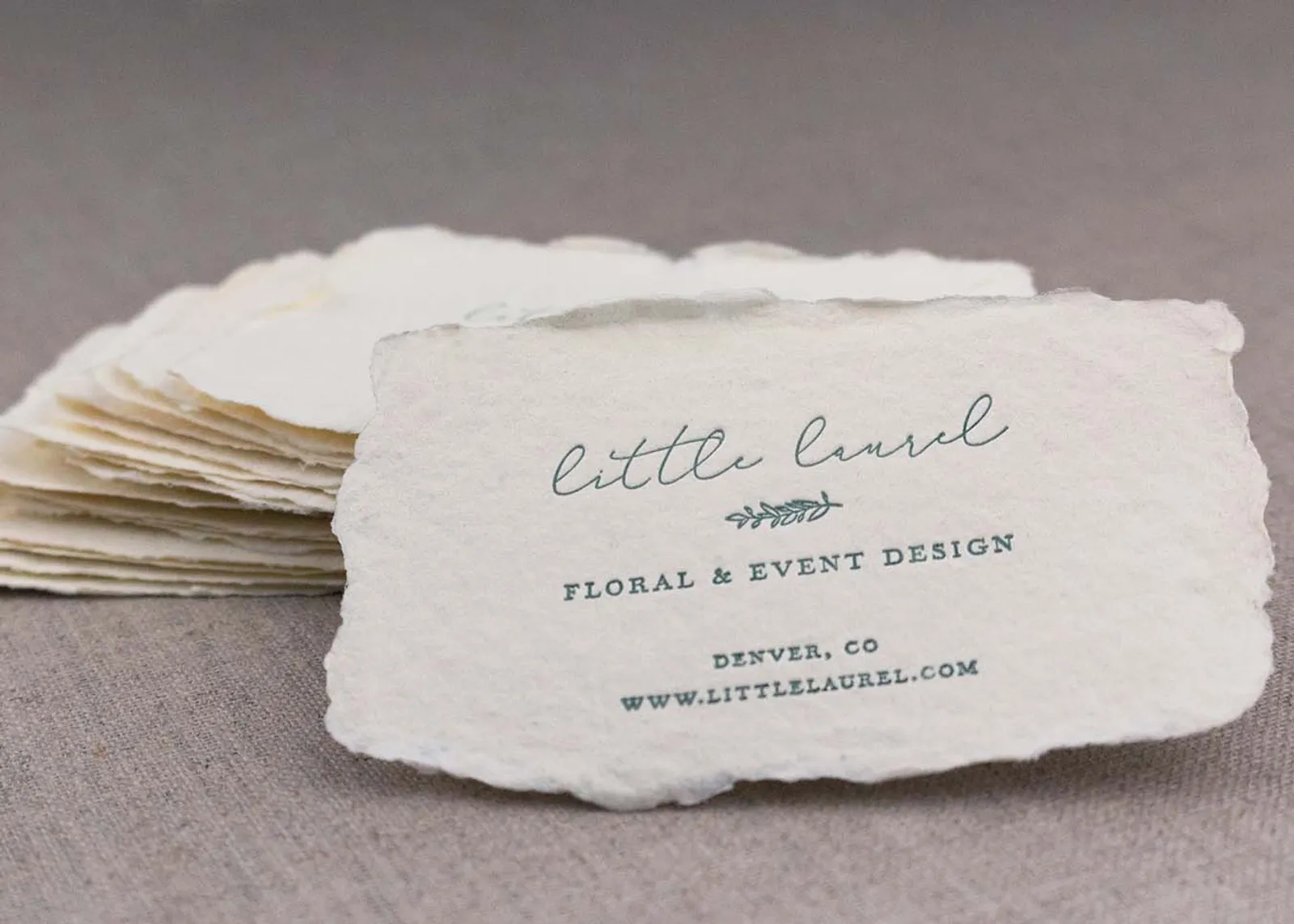
There’s a word that gets thrown around a lot in the printing world: handmade. And when people hear “letterpress,” they sometimes get stuck on a contradiction. There’s a machine involved, right? So how is it handmade?
Here’s the thing. A letterpress is not a digital printer. You don’t design something on a screen, hit a button, and walk away with a finished product. A letterpress is a tool operated entirely by a human. And in this world, we still use the old language: the printer is the person, and the press is the machine. The printer runs the show.
A Full-Sensory Craft
Letterpress printing is a fully immersive physical experience. The printer is watching the press, watching the ink, and listening closely. A keyed-in press operator can hear the rhythm of the machine and pick up on the telltale “sizzle” of the rollers on the ink disc to know whether the ink density is right. It’s made by hand, yes. But also by ears, by eyes, and by that sixth sense of what a good print is supposed to feel like.
That feel starts with the paper. Whether it’s 100% cotton stock like Crane’s Lettra, with its soft, pulpy texture trimmed to size on a paper cutter, or true handmade paper with rough deckle edges made to the exact sheet size from the start. A 5×7 piece of handmade paper was made that size, not trimmed down from a larger parent sheet. Every material choice is intentional.
The Impression Question
People talk about letterpress impression like it’s a yes-or-no thing, but it’s actually one of the most nuanced parts of the craft. Historically, deep impression wasn’t the goal. In the days of hot metal type, too much pressure could damage the soft metal characters. But modern photopolymer plates can handle far more force, so today’s printers can achieve that signature deep indentation that people love.
Getting that impression right is where experience shows. A skilled press operator looks at the artwork and knows how to configure the press to produce a deep, consistent bite that looks clean on the front and the back of the sheet. That’s actually a great way to evaluate a letterpress print: flip it over. The back tells the story. A clean, consistent impression throughout is the signature of someone who knows what they’re doing.
The secret lives in the makeready. This is the process of building up the press bed behind the paper, using small pieces of paper and adhesive to create a custom surface specifically shaped for the artwork being printed. No two makeready sessions are the same. It’s the part of the process clients rarely see, but it’s where the real craft happens. Sure, you can mount a plate and pull an impression without it. But the difference between “good enough” and “timeless” lives in those hidden layers.
And timeless is the right word. With archival inks and cotton or handmade papers, a letterpress print can last centuries. That’s motivation to get it right. Nobody wants their work criticized 300 years from now.
Color, Mixed by Hand
Every color in a letterpress run is mixed by hand. Using the Pantone Solid Uncoated swatch book as a reference, each ink recipe is weighed out on a high-resolution lab scale and blended on a glass palette before being applied to the press manually.
The press itself has ink keys that let the printer adjust ink density across the width of the platen. It’s a coarse system compared to modern computer-controlled presses. It relies on experienced half-screw turns across 20 individual keys, dialed in by feel and repetition rather than software. Digital printing builds tonal range through four-color process halftones, but letterpress is more deliberate. You might be working with just one or two spot colors, so every decision about those colors carries more weight.
Registration: By Hand and By Eye
When printing multiple colors, everything has to line up. In letterpress, that registration is done by hand and by eye. Photopolymer plates use crop marks. Foil stamping might use a transparent overlay. Either way, it often comes down to a printer with a micro ruler making tiny adjustments, nudging things into place one fraction at a time.
And here’s something people don’t expect: sometimes perfectly aligned doesn’t look perfectly aligned. A small nudge one way or the other is often necessary, applying a bit of artistic license on press. Computers don’t live in the physical world. The printer’s job is to act as a human interface between digital design, an analog press, and the end goal: a print that looks beautiful, feels amazing, and makes an impression on whoever holds it.
Finding the Right Printer
There are so many talented letterpress printers out there. The most important thing is finding someone you connect with. But beyond that personal fit, remember that this is physical work. Looking at photos on Pinterest only tells part of the story. Nothing beats holding a real sample in your hands.
Here’s a good test: anyone can make one good print if they take enough time. But can they make 100, or 1,000, or 10,000 good prints consistently? Can every wedding invitation in your order look just as sharp as the first one off the press? That kind of consistency is what separates a skilled printer from someone who got lucky once.
Ask for samples. A printer who is truly proud of their work will be excited to put something in your hands. And once you feel it, you’ll understand why “handmade” is exactly the right word.